For coaches · Live online · January and February 2027
Enneagram Coaching with AI
I've been coaching with the Enneagram for a long time, and here's what I keep noticing lately: the knowledge is everywhere now. Anyone can ask an AI what a Social Two looks like, and they'll get a decent answer in about four seconds.
So what's left for us?
The judgment. Sitting with a real person, noticing what's underneath the words, holding a typing read loosely enough to be wrong, knowing when to push and when to wait, and getting someone to an actual change in their life. That part still takes a human (and I don't think that's changing anytime soon).
That's what these trainings teach.
- 2
- trainings, January and February
- 4
- days each, Thursday to Sunday
- 28
- live hours each
- 10
- seats per training
- 3
- teachers in the room
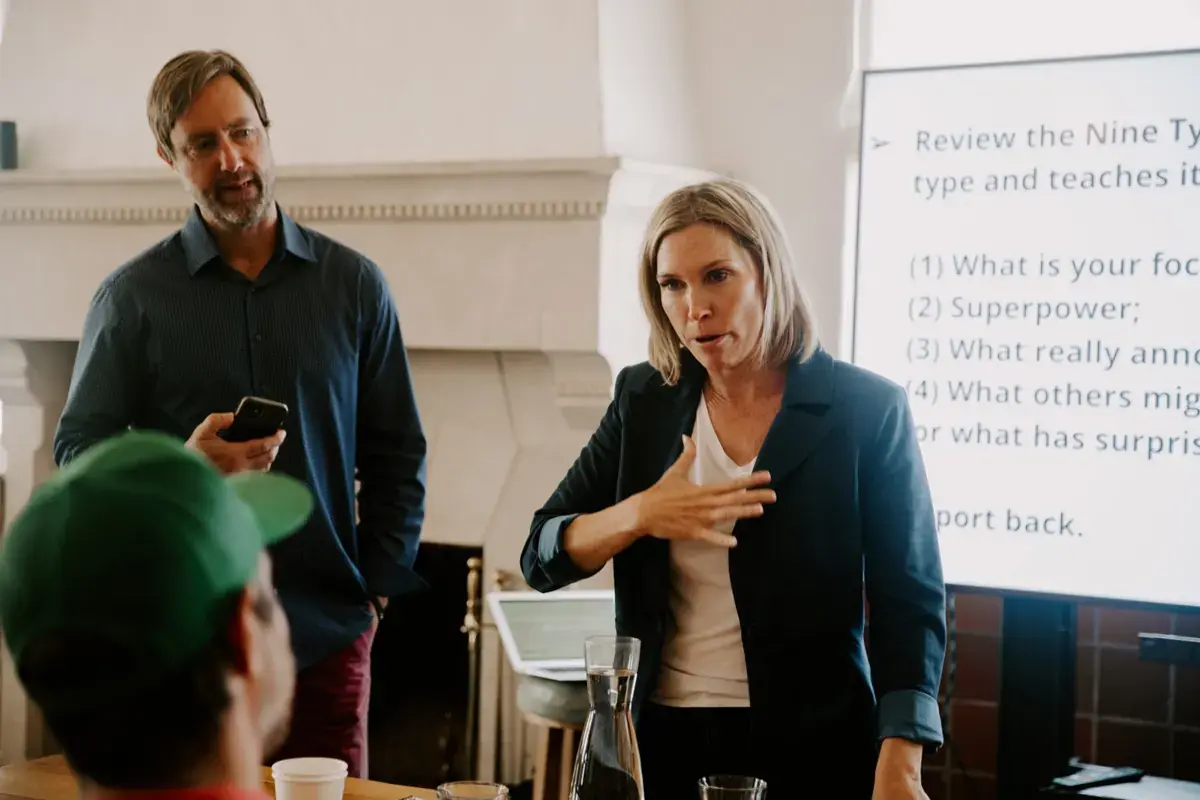
We teach it live. You practice with Emma.
Shelley, Marta and Chad teach every session live: the subtypes, the instincts, and how to work with them across the table from a real person. Emma, the AI Enneagram companion we built at Big Self School, is the tool you'll learn to use in your practice. Between the live days, you can use her to review what we covered, look up a subtype, or test your read of a client.
The live days are for the human part. You practice on each other, then with one real client of your own, so pick someone before Day 1. You'll leave with that client set up in Emma.
Each day opens with a short presence practice and closes with a circle. Most of the time in between is practice, with feedback.
“When I started using Emma with my own clients, my engagements went from six months to four. I kept my price the same.”
Emma did the typing before our first session, so we started deep. My clients practiced between sessions instead of waiting for me. I walked in already knowing what had happened since we last talked. At my $6,800 package, that turns one client slot from $13,600 a year into $20,400, in the same hours. That's what I want for you.
Shelley Prevost · one practice's experience, now being measured with our 2027 cohorts
January · Thursday to Sunday, January 21–24, 2027
I: Typing, Presence and Judgment
Four days, 28 live hours. By the end, you'll be able to:
- Type a client to subtype from their motivation, and say out loud how sure you are and why.
- Tell a type from a hard season. Stress, grief and burnout can make anyone look like a different type.
- Weigh Emma's read against your own, and know when to set hers aside.
- Coach from the subtype with honest, open questions, so the client names their own pattern.
- Use AI with clients ethically: consent, privacy, and a human in the loop every time.
What we cover
- Presence: how each type leaves the moment, and how you do
- Levels of awareness, above and below the line
- Self-observation, inquiry and development
- The map of subtypes and instincts
- Listening for motivation: harmonic and Hornevian patterns in what clients say
- Countertypes, look-alike subtypes and common mistypes
- Season or self: stress, grief, burnout, trauma and culture
- Reading an AI's typing evidence, and when to set it aside
- Offering a read without imposing it
- Developmental, behavioral and protective questions in place of "why"
- Designing experiments that turn insight into behavior
- Ethics of AI in coaching and of typing, and agreements when AI is in the work
- Observed coaching sessions with written feedback
- Measuring whether a client is growing
9:00 a.m. to 5:00 p.m. Eastern each day, live on Zoom. No prerequisite.
February · Thursday to Sunday, February 25–28, 2027
II: Advanced Skills, Relationships and Outcomes
Four days, 28 live hours. By the end, you'll be able to:
- Catch your own reactivity in a session and come back to presence.
- Adapt how you ask questions to a client's type and to where they are in their own growth.
- Tell real growth from a good week, using what clients actually do (and what Emma notices between sessions).
- Coach two people together, and hold a group in a circle.
- Know when a client needs more than coaching, and refer well.
What we cover
- The coach as instrument: noticing and recovering from your own reactivity
- Advanced inquiry by type, including resistance and defense
- Holding space or offering a reflection
- Levels of awareness and adult development, and pacing a client by them
- Motivational-interviewing skills
- Behavioral markers of growth, alongside what Emma notices
- Regression, stress and when to refer
- Two type patterns in one relationship: type and instinct pairings
- Coaching two people together: agreements and confidentiality
- Family and team systems
- Facilitating a circle, after Parker Palmer
- Teaching presence to clients, couples and groups
- Ethics with couples, families, groups and AI
- Contemplative practice by type
9:00 a.m. to 5:00 p.m. Eastern each day, live on Zoom. For coaches who've done Training I or have equivalent Enneagram training.
Coaches who work with the Enneagram, from any school. Therapists, pastors and spiritual directors who coach are welcome too. You'll need one real client you can invite before the first day. Ten seats per training.
Both trainings count toward the Emma certification, and you'll have Emma for your own practice and your client.
The Emma partner program. Coaches approved to use Emma become part of our partner program. What it includes is in discussion, and we're shaping it with this first group of coaches.
Continuing education. 28 clock hours per training, designed to meet Board Certified Coach (BCC) continuing education guidelines.
Do I need Enneagram training first?
Not for the January training. It helps, and you'll review the core theory before Day 1. The February training is for coaches who've done the January one or have equivalent Enneagram training.
What does a training day look like?
9:00 a.m. to 5:00 p.m. Eastern, with an hour for lunch. Live on Zoom with your camera on. Each day opens with a presence practice and closes with a circle. Most of the time in between is practice in pairs and threes, with feedback.
How much time does it take beyond the live days?
Some review before and between the trainings, at your own pace, using Emma and what we send you. It isn't counted toward the 28 hours.
Why do I need a client?
Because the point is to coach a real person, not just talk about it. You'll invite one client you already work with before Day 1, and leave with them set up in Emma.
What if I miss part of a day?
Continuing education hours count only for the sessions you attend in full. Attendance is taken at the start of each day and after lunch.
What continuing education do I get?
A certificate for the clock hours you attend, up to 28 per training, designed to meet Board Certified Coach (BCC) continuing education guidelines.
Taught by Shelley Prevost, Marta Gillilan and Chad Prevost.
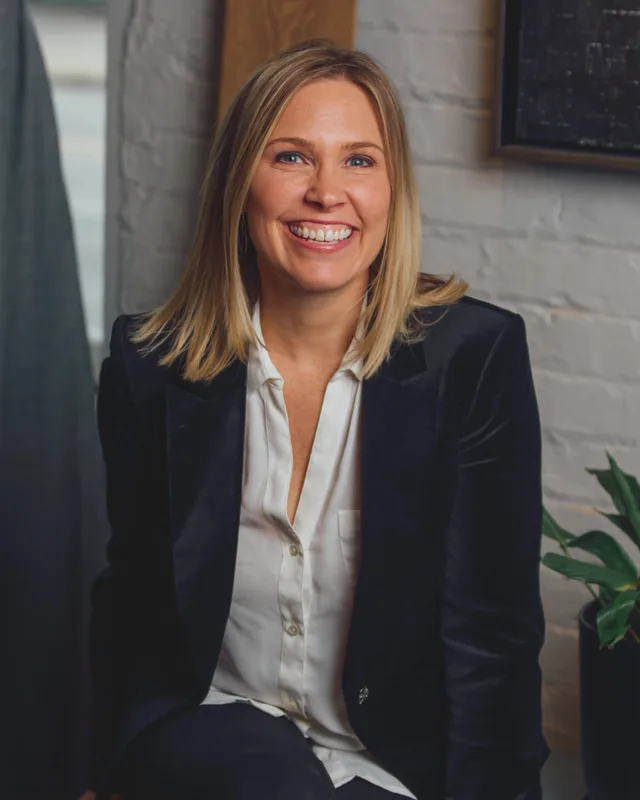
Shelley Prevost, EdD, LPC-MHSP, BCC. Educational psychologist, licensed therapist and board-certified coach, and the founder of Big Self School and creator of Emma. Twenty-two years as a clinician and 16 as a coach, working with people, leaders and teams through the Enneagram's 27 subtypes. In these trainings she teaches developmental coaching with Emma, the stages of consciousness, and using AI in your practice.

Marta Gillilan, MA. Certified Enneagram coach and ordained pastor, with a master's in global leadership from Fuller Seminary. More than 30 years of teaching: eleven in classrooms in Missouri and Sofia, Bulgaria, then 23 years at a church in Lee's Summit, Missouri, as teaching pastor and community life pastor, training leaders and offering spiritual direction. Since 2022 she has coached individuals and led team workshops through her own practice. She teaches Enneagram theory, coaching skills and group dynamics in these trainings, and leads the presence and contemplative practices.

Chad Prevost, PhD, MDiv. Co-founder of Big Self School and an ICF Associate Certified Coach (ACC), certified in the Enneagram and the Leadership Circle Profile 360. He has coached more than 50 executives and founders, wrote Shock Point: The Enneagram in Burnout and Stress (2023), and taught college writing for more than ten years. He is also the founder and publisher of Narrows Press. He teaches the Enneagram theory in these trainings.
January 21–24 and February 25–28, 2027, live online. Founding-member pricing, with an early bird that ends December 1. Write to hold a seat and we'll send the details.